
Understanding Ventilation Controls
Understanding Ventilation Controls
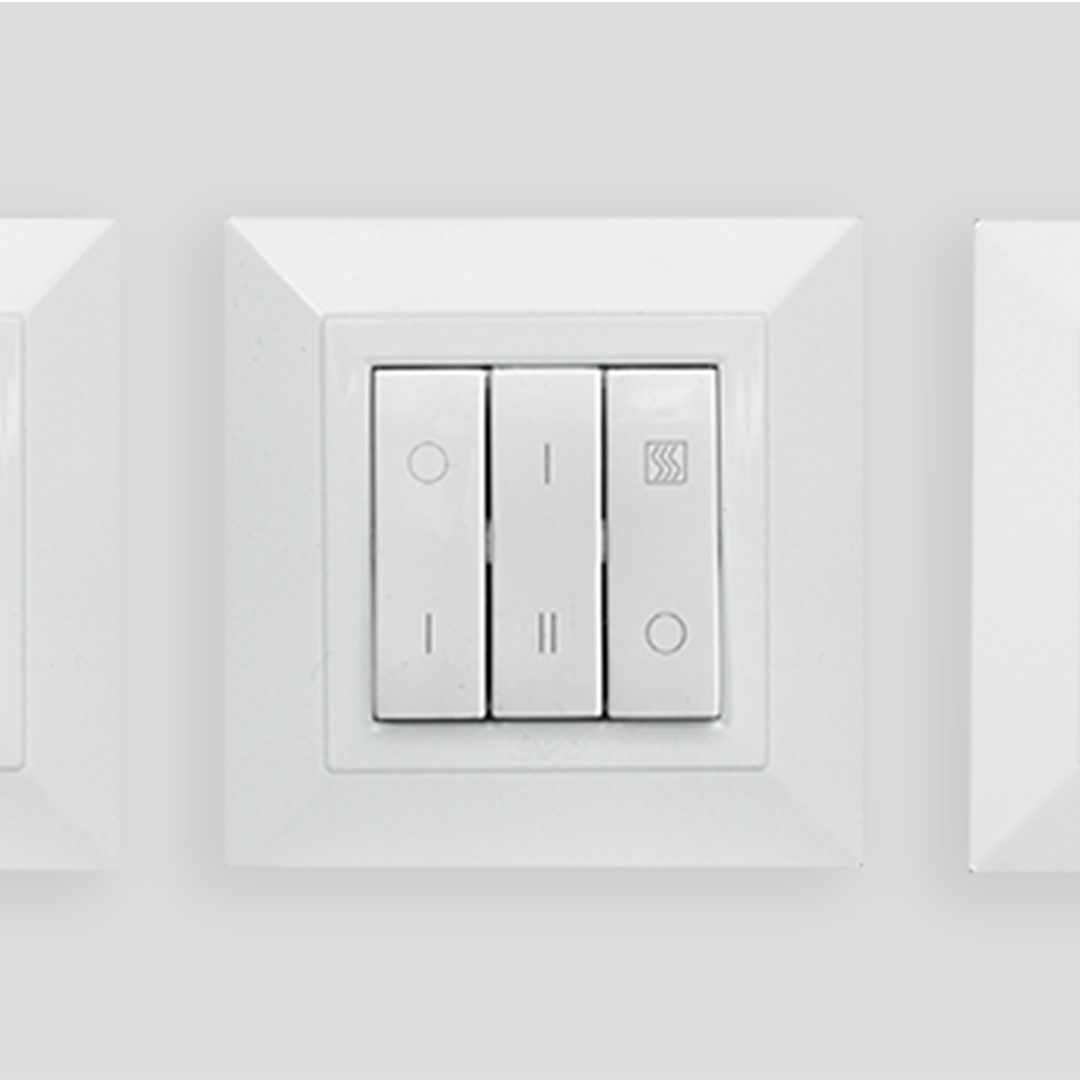
We spend a lot of time talking about choosing the right fan.
Airflow… Noise… Efficiency… Installation… Ductwork… The list goes on!
But there’s another part of the conversation that can sometimes get forgotten:
How is the fan actually controlled?
Because having the right fan installed is one thing. Making sure it operates when it needs to is another.
So, this month, we’re talking controls…
When does your fan come on?
Sounds like a simple question, but think about the extract fan in your bathroom. What actually tells it that it needs to start extracting?
Depending on the fan and the installation, there are several ways it might operate.
It could switch on with the light, detect an increase in humidity, or run continuously at a low level and boost when more ventilation is needed.
Or it could rely on somebody manually switching it on. (Hopefully not this one though).
This control can have a big impact on how well the room is ventilated.
Connected to the light switch is usually probably the setup most people are familiar with. For an intermittent extract fan, connecting operation to the light switch can help make sure the fan is used whenever the room is occupied.
But there’s a small problem with this…
What if you don’t turn the light on?
A quick shower on a bright summer morning might create plenty of moisture, but if there’s enough daylight that nobody reaches for the light switch, the fan may never be triggered.
The fan might be perfectly capable of ventilating the room. But it hasn’t been told to.
Humidity Sensors
Rather than relying entirely on someone to switch the fan on, a humidity-controlled fan can respond when moisture levels rise.
Shower goes on, humidity increases, and the fan responds.
It means the ventilation is reacting to what’s actually happening in the room rather than relying solely on occupant behaviour.
Depending on the product and controls, the fan can then continue operating until humidity levels have reduced.
Pretty clever for something most people barely notice on the wall.
Another familiar option is a timer.
Instead of the fan switching off the second the trigger is removed, a timer allows it to continue running for a set period afterwards.
Why does that matter?
Because the moisture created by a shower doesn’t magically disappear when you leave the bathroom.
Allowing the fan to continue extracting gives it more opportunity to clear the moisture-laden air after the room has been used.
Or… don’t switch it off at all.
“But isn’t that expensive?”
Not necessarily.
Continuous extract fans, such as dMEV, are designed to run 24/7 at a low trickle rate.
Rather than waiting for humidity and pollutants to build up and then trying to remove them, the fan continuously extracts a small amount of stale, moisture-laden air.
When additional ventilation is needed, it can then boost to a higher airflow rate.
So what is the best option?
In some situations, simple manual control might be perfectly suitable. Elsewhere, ventilation may need to respond automatically to changing conditions or operate continuously.
The important thing is that the control strategy matches what you’re actually trying to achieve.
Because specifying a fan capable of delivering the required airflow is only useful if the fan is operating when that airflow is needed.
If a ventilation system relies completely on somebody remembering to switch it on, there’s always a chance they won’t.
Equally, if a fan is noisy, inconvenient or confusing to operate, there’s a chance somebody will switch it off and leave it off.
Choosing the right fan is only half the job. Making sure it works when you need it? That’s the other half.
Got a question about fans, controls or ventilation in general? Drop us a message. As you probably know by now, we’re always happy to talk about fans.
Need help? Email or call the team on 01384 275771

